Introduction
This article is a chapter from a forthcoming book on Guhai Namasivaya and his chief disciple, Guru Namasivaya. A chapter that narrates Guhai Namasivaya’s life appears elsewhere in this section. The authors, T. V. Venkatasubramanian, Robert Butler ad David Godman, are responsible for all the translations of verses by or about Guhai Namasivaya and Guru Namasivaya.
The material in this chapter is primarily derived from a Tamil anthology of writings on Arunachala entitled Arunachala Puranam (1934 ed., pp. 55-74). The dialogues, the biographical narrative and most of the verses are taken from this text. A few additional verses have been taken from Guru Namasivayar Padalgal, by Pulavar V. Sivajnanam, published by Vijaya Padippagam, Coimbatore. When verses are attributed to Siva Kshetra Kovai, they have been taken from a work entitled Sri Kumaradevar Sastrakkovai, published by Golden Electric Press, 1923. This work contains nine verses that were sung by Guru Namasivaya at Vriddhachalam.
All the explanations of legends and traditions, along with the references to Ramana Maharshi’s views on Arunachala, are editorial additions.
There is no information about the early part of the relationship between Guhai Namasivaya and Guru Namasivaya. The only available account of his life begins at a point where Guru Namasivaya is living with his Guru and manifesting siddhis.
Guru Namasivaya’s life story
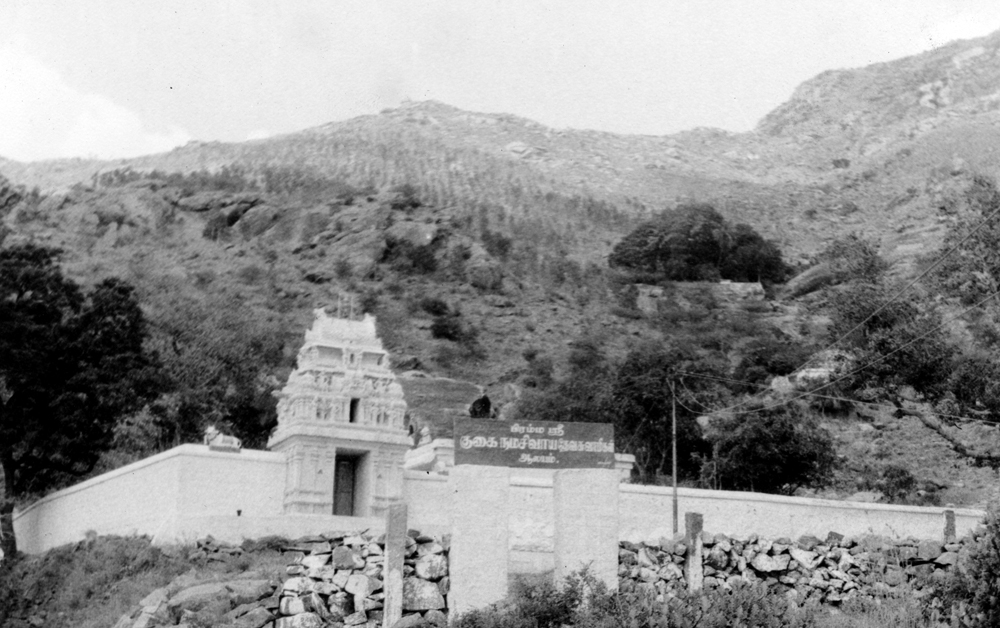
The story opens with Guhai Namasivaya lying in his hammock, his favourite resting place, absorbed in the Self. Guru Namasivaya is nearby, doing service to him. Suddenly, and for no apparent reason, Guru Namasivaya burst out laughing.
‘Namasivaya,’ asked his Guru, ‘What wonder did you see that made you laugh?’
The disciple first responded by reminding his Guru of their relationship.
‘When I offered you my body, my possessions and my soul, you, my Lord, accepted them all, having a wish to take over this slave.’
Then he went on to explain what had caused him such amusement.
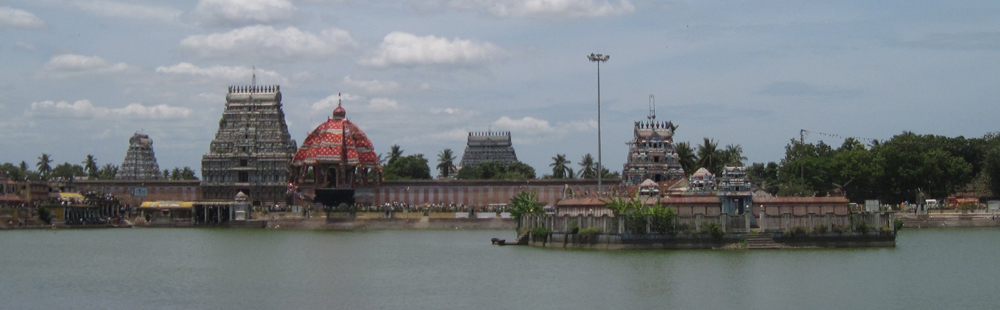
‘At Tiruvarur [a temple town located a long way from Tiruvannamalai] Tyagaraja Swami [the presiding deity of the Tiruvarur Temple] was being taken in procession through the streets. Many women dancers, so skilled that they cannot be equalled by apsaras [dancers from the heavenly realms], were accompanying it and dancing. One of these women stumbled and fell. All those who were standing there laughed. I too laughed. That is all. There was nothing else.’
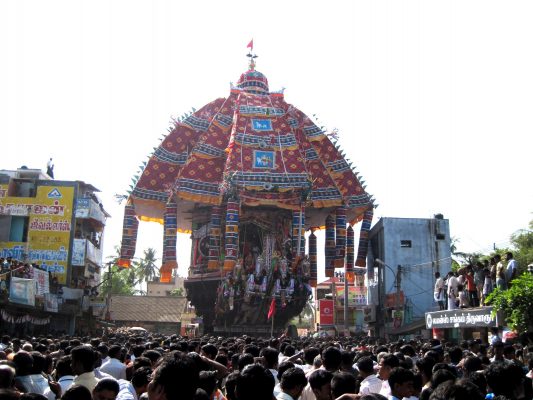
This same psychic ability manifested sometime later when Guhai Namasivaya noticed that his disciple had just rubbed the cloth he wore around his shoulders in a strange way.
‘For what reason did you rub it?’ he asked.
The disciple answered, ‘The [puja] curtain was drawn in front of the Golden Dancing Hall at Chidambaram. The wick of a ghee lamp was burning nearby. A mouse took the burning wick, dragged it along, causing the screen to catch fire. Those who were present vigorously smothered the burning screen. Swami, I too rubbed my cloth so that the curtain would not burn any more.’
Guhai Namasivaya then decided to test his disciple’s level of devotion. He vomited, caught the vomit in his begging bowl, and then ordered his disciple to dispose of it in a place where it would not come into contact with human feet. The disciple’s love for his Guru was so great, he took the vomit to be prasad and secretly ate it.
Guhai Namasivaya affected not to know what his disciple had done. Later, he asked him ingenuously, ‘Appa Namasivaya, did you leave it in a place where feet could not touch it?’
The disciple bowed his head and confirmed that he had taken it to be prasad. ‘I have kept it in a place where it ought to be kept,’ he answered.
Seeing the powers his disciple was developing, and noting the extent of his devotion, Guhai Namasivaya thought to himself, ‘Day by day my disciple’s jnana is increasing. He should not be kept here any more. Let me test him one more time, and then I can send him to a place that will be appropriate for him.’
Guhai Namasivaya then composed a portion of a venba verse and recited it to his disciple:
The fruiting banyan tree provides food for the birds.
[Even] in its fruited state the babul tree is of no use [to them].
Then, addressing his disciple, he said, ‘Appa Namasivaya, you can complete the remainder of this venba for me’.
The disciple immediately realised that he was being tested. As he examined these two lines he realised that he was being told obliquely that he was now a ‘fruiting banyan tree’ who could provide spiritual food for those who approached him. The second line indicated that though Guhai Namasivaya was also in a state of spiritual fruition, it would no longer be profitable for Guru Namasivaya to remain with him.
Guru Namasivaya was very much attached to the physical presence of his Guru and wanted only to stay with him and serve him. The idea of abandoning this simple and satisfying relationship did not appeal to him. However, being a fully surrendered devotee, he felt no inclination during this test to dispute the words and decision of his Guru.
So, when Guhai Namasivaya asked him to complete the verse, he merely replied, ‘Swami, the disciple should not bandy words with the Guru. This is not proper conduct for the disciple.’
Guhai Namasivaya then gave him the freedom to express his own views by saying, ‘You are a son who possesses jnana. You may speak.’
Guru Namasivaya then completed the verse by adding the following words:
Namasivaya, sir, would you consent to keep company
with one who does not perform great and wondrous deeds?
Two important Tamil grammatical points should be noted here. Firstly, the lack of a respectful form of address indicates that Guru Namasivaya is completing the verse as if the words are being spoken by Guhai Namasivaya. They do not therefore mean that Guru Namasivaya is asking if he can stay. Secondly, there is a suffix attached to one of the words that indicates a rhetorical question whose answer is ‘no’. Though the English translation sounds as if the disciple is asking if he can stay, the grammar of the original clearly indicates that the Guru is saying ‘You no longer need to stay with me’. ‘The great and wondrous deeds’ refer to the siddhis that Guru Namasivaya was manifesting regularly.
Guhai had framed the opening lines in such a way as to indicate that he accepted his disciple’s Self-realisation. They also indicated that he wanted to send him away so that others could benefit from his realisation. Though Guru Namasivaya wanted to stay, he indicated his level of maturity and surrender by completing the verse in such a way that indicated acceptance of his Guru’s wishes.
Guhai Namasivaya was delighted with the way that his disciple handled the test.
He climbed down from his hammock and exclaimed, ‘Appa! Pupil of my two eyes! You have attained true jnana! What a wonder! Who will ever get a disciple like you? From today you get to use the name “Guru Namasivayamurti”.’
Embracing his disciple he continued, ‘Two elephants should not be tied to the same post. This is a bhoga kshetra [see the explanation given below]. There is a divine kshetra [holy place] called Chidambaram where Ambalanavar, [the God] who removes ignorance and grants true jnana, has graciously manifested. You have some renovation and endowment work at that place. So, go and live there.’
Bhoga means enjoyment or pleasure and is generally associated with physical or sensory indulgence. A kshetra is a holy place. So, a bhoga kshetra can be literally translated as ‘a holy place for the enjoyment of physical pleasure’. Since this is a strange and inappropriate designation for a sacred site such as Arunachala, one should look for alternative translations and explanations.
One possibility is that Guhai Namasivaya is referring to one of three avattai – modes of being of the deity:
- ilayam, in which only the divine knowledge is manifest.
- bhogam, in which knowledge and action are equally balanced.
- adikaram, in which action predominates.
If one follows this explanation, one can interpret Guhai Namasivaya’s comments to mean that Arunachala is one of the places where Siva became involved in the world, performing lilas as well as bestowing grace and liberation, whereas Chidambaram is a kshetra where Siva’s energy is concentrated solely on the granting of divine knowledge. This interpretation does not imply that one place is superior to the other. It merely notes that Siva chooses to function in a different way in Chidambaram. At first glance this explanation looks plausible, particularly since Guhai Namasivaya contrasts the bhoga kshetra of Arunachala with the ‘divine kshetra’ of Chidambaram. However, closer scrutiny reveals a major problem: Siva has repeatedly manifested at Chidambaram for the benefit of his devotees there, so that would make it, like Arunachala, a bhoga kshetra.

An alternative explanation can be found in Day by Day with Bhagavan (6th December, 1945). Devaraja Mudaliar asked Bhagavan about one of the verses from Arunachala Mahatmyam that Bhagavan had translated into Tamil. At the end of the verse Arunachala-Siva, speaking of Himself, says, ‘Know that within me a cave shines, surging with many enjoyments [bhoga]’. (Sri Arunachala Stuti Panchakam, p. 14) The following dialogue ensued:
I asked Bhagavan whether the cave mentioned in it is inside God or inside the mountain (which of course is also said to be God). Bhagavan replied, ‘Of course, in the context, it means the cave is inside the hill and that there in the cave are all enjoyments’. Bhagavan added, ‘The stanza says you are to believe that inside this hill there is a cave and that all enjoyments are to be found there’. I also asked Bhagavan, ‘I have read somewhere that this place is called bhoga kshetra. I wonder what is meant thereby?’ Bhagavan replied, ‘Yes, it is so. But what does it mean? If thinking of this kshetra can itself give mukti, what wonder if this place can give all other enjoyments one may desire.’
Arunachala is also referred to as a ‘Bhoga Lingam’ in verse 82 (Sri Ramanasramam edition) of Arunachala Puranam: ‘… Now I shall tell as best I may how He [Siva] who uproots sorrow and joy, for the good of Mal and Ayan [Brahma and Vishnu], became a vast flame, growing upward till it pierced the very heavens, and then how He took the form of the Bhoga Lingam.’
Going back to the story, it will be remembered that Guhai Namasivaya had instructed his disciple to go and live in Chidambaram. Though Guru Namasivaya had appeared to accept this decision when he completed the venba verse, he decided to make his true feelings known.
He told his Guru, ‘This slave will remain here, having the Guru’s darshan, and will reach the feet of the Guru. He will not go to another place. Moreover, this slave cannot go on living without having daily darshan of the Guru.’
Guhai Namasivaya was unmoved. ‘Go to Chidambaram,’ he ordered, ‘and have darshan of the Golden Dancing Hall [the shrine in which Siva in the form of Lord Nataraja resides]. If the Lord there gives you darshan even as I do myself, stay there. If not, come back here.’
Accepting the promise that the divine darshan would not be cut off, the disciple finally admitted defeat.
‘This is good advice,’ he said. ‘I will follow it.’
In later life, after he had completed the work in Chidambaram that his Guru had sent him to execute, he composed a verse which indicated that he knew that respect for the Sadguru and his wishes was non-negotiable:
Lord of Chidambaram,
the One [who dances] in the Hall!
Unless one cherishes the Sadguru,
unless one praises the Sadguru,
unless one takes refuge at all times in the Sadguru,
unless one stands and serves the Sadguru,
will the long sequence of births come to an end? (Chidambara Venba, v. 66)
Having accepted the decision of Guhai Namasivaya, he composed ten verses that praised him. This was the first:
O Namasivaya, the spiritual power who destroys the bonds of birth
in a subtle way through words and through thought,
through your glance and through your touch,
and through your grace which gladdens our hearts!
If the four-legged stool, through which one sports with reality,
so as to completely merge with it, becomes my support,
it would be possible for me to attain liberation.
The four-legged stool is a cryptic reference to the four avasthas, the three states of waking dreaming and deep sleep, and the fourth state, turiya, that underlies and supports them. If one abides as turiya, one can sport with reality through the three other avasthas that come and go.
Guhai Namasivaya, feeling that delay would serve no useful purpose, responded to the song by saying, ‘You can start right now’.
Guru Namasivaya began to walk towards Chidambaram and by the time night fell he had covered about ten miles. Desiring a place to rest, he sat down under a tree and spent three hours absorbed in the Self. Then, becoming aware that he was hungry, he composed a venba verse that he addressed to Unnamulai, the consort of Siva in the Arunachaleswara Temple:
You who are the delightful to the heart of Lord Annamalai!
Holy Unnamulai! Uma!
Bring forth rice from every household
to feed Your servant
so that he can remain close to You
and cherish you every time he meditates on You.
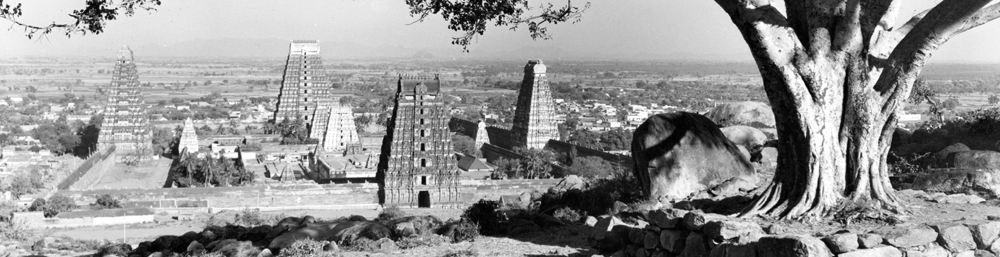
When Guru Namasivaya asks the Goddess to bring him rice in this and subsequent verses, he is actually just asking for food. Since rice is the predominant component in all South Indian meals, it has become a synonym for food in general.
At the moment when Guhai Namasivaya was composing this verse, there was some sweet rice resting on a golden plate in the Arunachaleswarar Temple. It had been offered to Lord Annamalai as naivedyam (food offering), and the priest who had officiated had inadvertently forgotten to take the plate home with him when he had locked up the temple for the night. When Unnamulai heard Guru Namasivaya’s prayer, She took the plate of rice to him and then returned to the temple.
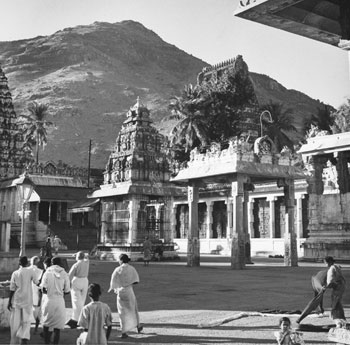
At daybreak the priests opened the temple and looked for the golden plate. After searching fruitlessly for some time, the priests and the people of the town became convinced that the plate must have been stolen by a thief, although they could not understand how he had got into and out of the temple. No pujas were performed for eight hours while everyone was engaged in a search for the missing plate.
At the end of that period a brahmin boy went into a trance, became possessed by a spirit and announced, ‘Guru Namasivaya is under a banyan tree on his way to Chidambaram. Mother took food for him. The plate is lying there. Go and fetch it.’
The plate was eventually found there and returned to its rightful place in the temple.
Guru Namasivaya got up the next morning, completed his morning ablutions and walked eastwards, praising his Guru. His next stop was at a holy place called Rishi Vandanam, nowadays known as Rishivandiyam. In this kshetra Siva and Parvati remain united as Ardhanari, an androgynous half-male and half-female form. This deity had been worshipped in ancient times by the king of the rishis, Agastya Mamunivar.
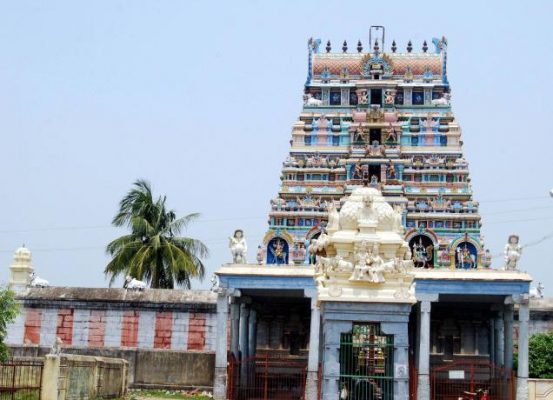
Guru Namasivaya took a bath there in a holy tank called Aiyayiram Kondan, completed his puja, and then with a purity of body, speech and mind, worshipped the Lord of that place and had his darshan. Afterwards, he went back to the banks of the holy tank and became absorbed in the Self.
The anonymous author of the original Tamil story frequently states that Guru Namasivaya went into or became absorbed in nishta. Generally this means abiding undisturbed in the Self in a state in which one is not aware of anything other than the Self. However, the various contexts in which the term appears seem to indicate that the author is describing a samadhi state or a yogic trance in which Guru Namasivaya becomes aware of facts or events of which he had no knowledge in his ordinary waking state. I have, accordingly, occasionally translated nishta as ‘yogic trance’.
Some time later, when the pangs of hunger came, he composed the following verse to the Divine Mother:
Will a child starve while the Mother exists?
Is it just that I should languish as long as You are here on this earth?
You whom all the hosts of heaven praise!
You whose shoulders are slender like bamboo,
and whose earrings are of brilliant pearls,
I beg You, bring me rice!
When the Mother heard this song, she came and asked, ‘My son, when I am united with the Lord here, is it proper for you to sing to me as a separate entity? Now sing me another song in which I remain united with him.’
Guru Namasivaya obliged by composing and singing the following song:
You whose earrings are of shining pearls,
You who are one with Lord Siva,
whose throat is like a dark cloud pierced by lightning!
Mother, You who shine brighter than gold!
Daughter of the mountain who abides in my heart of stone!
I beg You, bring me rice!